
What has I4C been reading over the past few months?
What could be better than cozying up on a cold day with a good read? In this series, the I4C consortium members share their best findings with you. Discover them below, and may these insights inspire you as the season of change unfolds!
Eren Duzenli
Eren Duzenli is a postdoctoral researcher at the Barcelona Supercomputing Center (BSC), where he plays an active role in the I4C project, particularly in the area of subseasonal to seasonal statistical downscaling. His research is dedicated to developing and rigorously evaluating methods that generate high-resolution climate variables, ensuring that complex climate information can be translated into formats that are more actionable and relevant for local and regional contexts.

In addition to his scientific contributions, he supports the I4C project by engaging directly with stakeholders, working to capture their needs and priorities, and translating them into technical requirements that can guide research outputs. His work contributes to bridging the gap between advanced climate science and practical, user-oriented applications. He recently read “Statistical downscaling differences strongly alter projected climate damages” in Communications Earth & Environment. The study examines downscaling not only as a technical challenge but also as a driver of very different socio-economic outcomes at the global scale. The variation in projected economic impacts across methods is especially pronounced in sparsely populated areas and in regions with low per-capita GRP. This highlights disparities in society’s capacity to respond effectively to climate damage, as information for these regions is more uncertain than for others.
Stephanie Mayer
Stephanie Mayer is a senior researcher at NORCE Research. She’s a meteorologist with a PhD in experimental meteorology. Her principal research interests are atmospheric modeling and investigating physical climate risks. In I4C, Stephanie analyses detailed climate data from regional climate models and climate hazard indices. She translates these data into climate information relevant for the demonstrator city of Bergen. Stephanie is also involved in organising the I4C Adaptalabs.
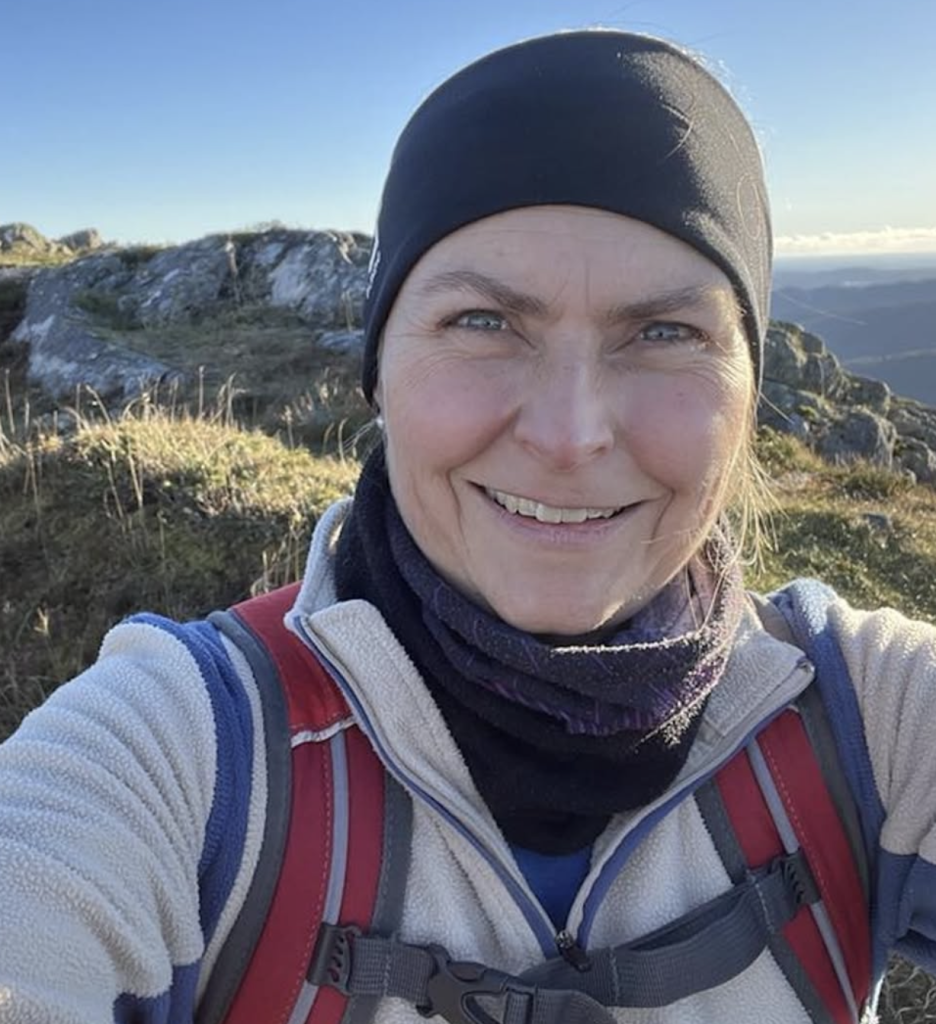
Recently, Stephanie read “Probabilistic simulation of big data for robust quantification of changes in compound events” by Theodores Economou and Frey Garry, published in Weather and Climate Extremes in 2022. The study presents a statistical method to examine rare and extreme events in regional climate models, thereby providing more robust estimates of such events. She also came across the book “Radically Emotional – How Emotions Make Politics” by Maren Urner. Based on recent neuroscientific knowledge, Urner analyses how emotions affect politics and offers tools for addressing these influences. This book encouraged her to reflect more on solution-oriented communication when discussing the dangers of future weather extremes and the urgent need for climate change adaptation.
Silius Mortensønn Vandeskog
Silius Mortensønn Vandeskog is a statistician at the Norwegian Computing Center. In I4C, his research is centred on understanding and improving the representation of climate extremes in predictive systems. He works on extracting and analysing extreme indices from large ensembles of climate model simulations, which helps to identify patterns, assess risks, and evaluate model performance under different climate scenarios.

Silius focuses on the development of methods to blend subseasonal and seasonal forecasts, aiming to bridge the gap between short-term weather prediction and long-term climate projections. By combining these forecasting horizons, his work contributes to enhancing the reliability and usefulness of short- to medium-range predictions, providing valuable insights for decision-making in sectors sensitive to climate variability and extremes. To stay current with developments in data science, Vandeskog follows the R Weekly newsletter, which highlights how the R language is evolving and being applied in both industry and academia. This resource provides valuable insights into new tools and features, helping him work more efficiently and identify the most suitable methods for addressing specific problems.