
Turning climate knowledge into local action: insights from the Barcelona workshop
On 28 January 2026, the workshop “Network of Cities and Towns towards Sustainability and Impetus4Change” brought local authorities, researchers, and practitioners together in Barcelona to explore how climate knowledge can drive real-world action. Co-organised by the Barcelona Metropolitan Strategic Plan (PEMB), the Barcelona Supercomputing Center (BSC), and 300.000 Km/s, and hosted at the Canòdrom – Athenaeum of Digital and Democratic Innovation, the event was held in cooperation with the Network of Cities and Towns towards Sustainability in the Province of Barcelona.
With contributions from the climate change offices of the City of Barcelona, the Metropolitan Area of Barcelona, and the Province of Barcelona, alongside researchers and local stakeholders, the workshop focused on turning climate data into decision-ready tools. Discussions drew directly on the experience of climate services co-developed and tested within the Impetus4Change (I4C) Barcelona Demonstrator, highlighting their potential to support local and regional climate action.
From climate science to municipal action
The I4C Barcelona Demonstrator plays a central role in enabling this transition from climate science to municipal action, serving as a real-world testing environment for the co-development of climate services tailored to urban and regional needs. During the workshop, I4C project partners and researchers presented the three climate services co-developed in Barcelona, illustrating how near-term and longer-term climate information can support planning, preparedness, and climate adaptation, particularly in response to increasing heat risk.
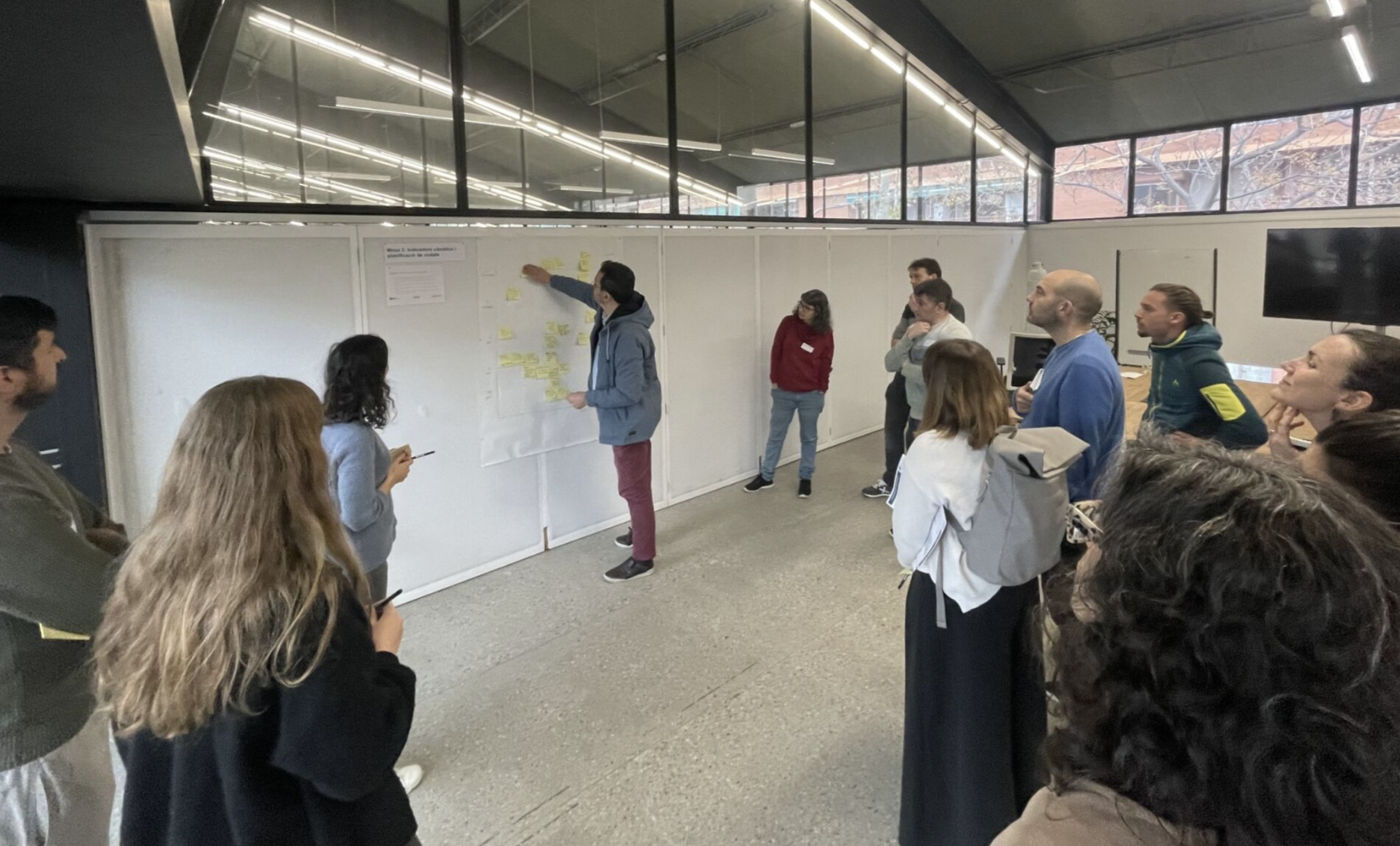
Beyond the presentation of tools, the discussions highlighted I4C’s role in actively mediating between scientific expertise and the operational and institutional realities of local and regional authorities. By structuring dialogue between climate scientists, technical experts, and public authorities, the demonstrator supports the alignment of climate information with concrete decision-making contexts, governance frameworks, and planning cycles.
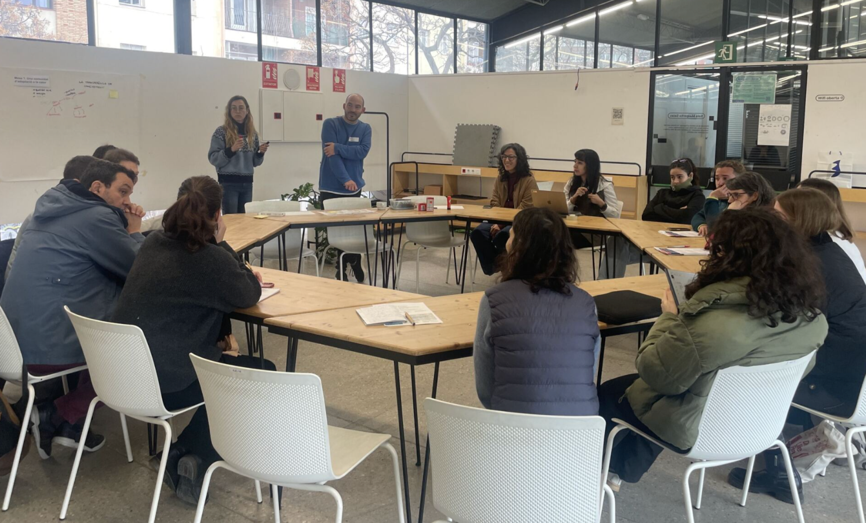
Three roundtable discussions formed the core of the workshop, each providing targeted feedback on the usability, relevance, and potential scale-up of the climate services developed within the Barcelona Demonstrator:
- Sub-seasonal climate forecasts
The first roundtable examined the use of climate forecasts at short time scales, from weeks to months, as developed and tested within the I4C framework. Participants discussed whether sub-seasonal information can support operational and day-to-day decision-making, and how such forecasts could be integrated into existing municipal processes, particularly for preparedness and response during heat events. The discussion helped clarify where sub-seasonal forecasts can add value as decision-support tools, while also identifying limits, uncertainties, and requirements for their responsible use—insights that directly inform the ongoing refinement of the I4C services.
- Longer-term climate information for planning
The second roundtable addressed the use of longer-term climate information in urban and territorial planning. Discussions focused on the selection and interpretation of climate indicators, approaches to communicating and managing uncertainty, and potential entry points for climate information within planning instruments such as adaptation plans, regulations, and strategic planning frameworks. This exchange reinforced the importance of the I4C approach in adapting climate information to planning mandates and timescales, rather than expecting planning processes to adjust to scientific outputs alone.
- Heat adaptation community
The third roundtable focused on the Heat Adaptation Community, an approach promoted within I4C to support local adaptation to extreme heat through communities of practice. Discussions explored how this model could be extended to additional municipalities across the Province of Barcelona, and how structured peer exchange can complement technical climate services by fostering shared learning and capacity building. The discussion highlighted I4C’s role in recognising that effective adaptation depends not only on data, but also on social processes that support interpretation, confidence, and uptake.
Click here to dive into the I4C Barcelona Demonstrator presentation!
Key messages from the workshop
Across the three discussions, several common messages emerged:
- the need for climate services that are tailored to concrete municipal needs and aligned with local planning and decision-making cycles
- the importance of co-production, a core principle of the I4C approach, combining scientific expertise with local knowledge to ensure relevance and usability
- strong interest in tools and approaches developed within I4C, such as sub-seasonal forecasts and communities of practice, to support both operational responses and longer-term adaptation strategies at city and regional level
These discussions also highlighted the role of the I4C Barcelona demonstrator as a structured space for testing not only technical solutions, but also governance arrangements and collaboration models that could support wider uptake across the Province.
Looking ahead
Initial feedback from participants highlighted a demand for clear, locally relevant climate information that supports both operational and strategic decisions, as well as interest in platforms that facilitate ongoing exchange between researchers and public authorities. Participants also expressed willingness to remain engaged in further testing and co-development of the services within the I4C framework.
Overall, the workshop demonstrated the added value of the I4C Barcelona Demonstrator as a space where climate knowledge, institutional practice, and stakeholder experience can be brought together. By combining scientific innovation with co-production, institutional learning, and pathways for scale-up, I4C contributes to strengthening the link between climate knowledge and local action in cities and regions.