
Reflecting on EGU2026: I4C advancing climate science for resilient cities
The EGU General Assembly 2026 once again brought together thousands of researchers, scientists, and practitioners from across the world to exchange ideas on the future of climate science and adaptation. Throughout the week in Vienna, I4C actively contributed to discussions exploring how climate knowledge can better support communities facing increasingly complex climate risks.
Across oral and poster sessions, our team showcased ongoing research focused on improving near-term climate predictions, understanding urban climate extremes, and developing climate services that are both scientifically robust and directly useful for decision-makers.
From high-resolution climate simulations to innovative hybrid modelling approaches, the presentations highlighted the project’s ambition to bridge the gap between advanced climate science and real-world adaptation needs.
Highlights from Vienna
A central theme throughout the week was the growing demand for climate information that reflects the realities faced by cities and communities on the ground. I4C researchers presented new work on indicators of extreme hazards in regional and convection-permitting climate models, showing how higher-resolution simulations can more accurately capture local climate risks such as heatwaves and intense rainfall.
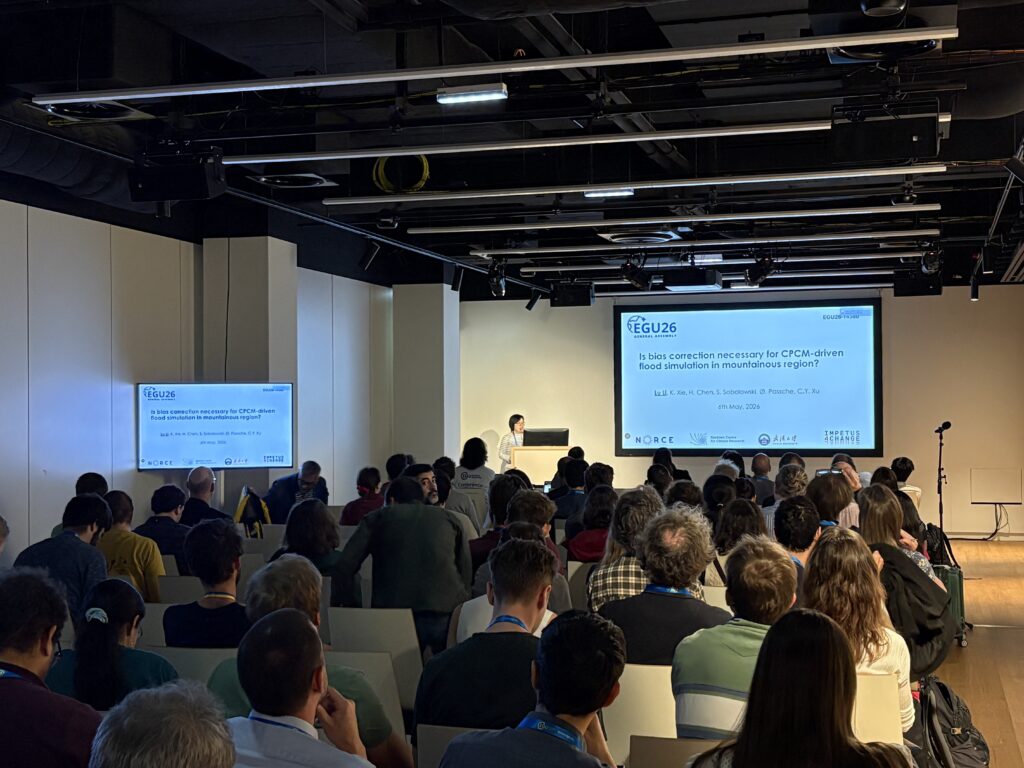
Related research presented at EGU2026 also explored how convection-permitting regional climate models can support flood-risk simulations in mountainous regions. The work examined the role of bias correction in improving precipitation and temperature data for hydrological modelling, highlighting how climate impacts can vary significantly depending on local terrain and hydrological processes. The findings contribute to ongoing efforts to develop more reliable high-resolution climate information for flood-risk assessment and adaptation planning.
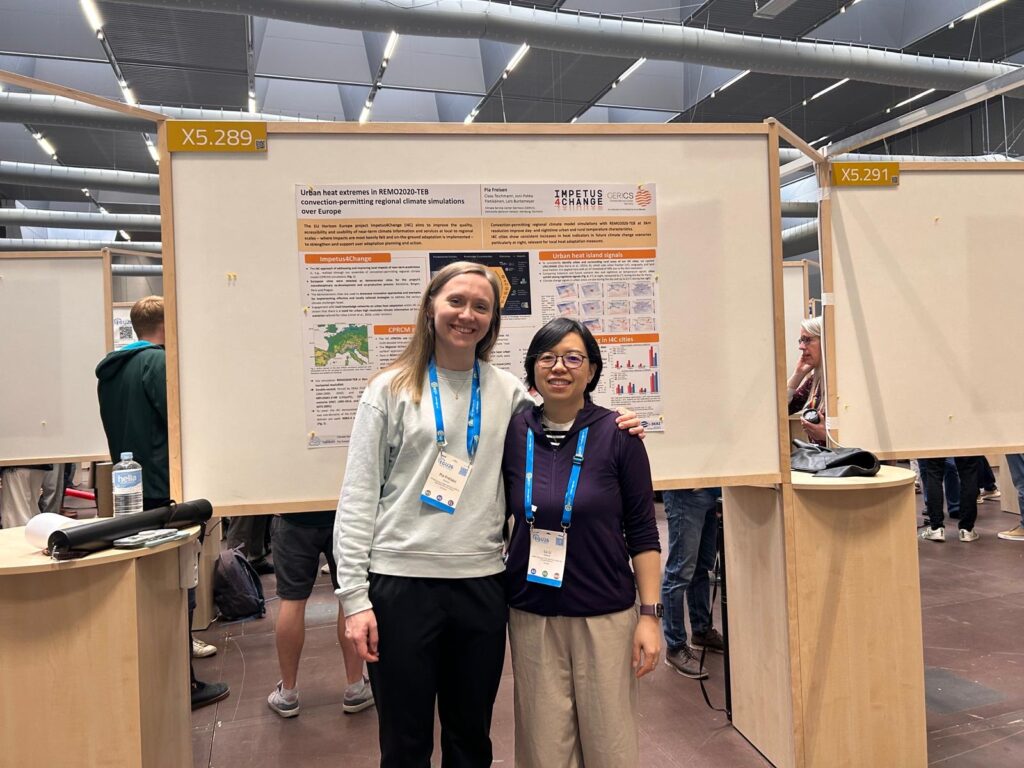
Using convection-permitting regional climate simulations, researchers also examined how European cities could face increasingly intense and prolonged heat events in the coming decades. The research highlighted how densely built urban environments can exacerbate heat stress, with significant consequences for public health, infrastructure, and overall quality of life.
These findings further emphasise the importance of adaptation measures, including urban greening, climate shelters, and heat-resilient urban planning strategies. They also demonstrate the added value of high-resolution climate modelling for understanding climate impacts at the scale at which people actually experience them.
Combining innovation and climate prediction
Another highlight of the conference was the presentation of hybrid approaches for climate science, combining process-based understanding with emerging machine learning and artificial intelligence techniques.
As climate systems become increasingly complex to model, hybrid methods offer new opportunities to improve prediction capabilities while maintaining scientific transparency and reliability. At EGU2026, I4C researchers explored how these approaches could support the next generation of climate services by making climate information more accurate, localised, and responsive to societal needs.
The team also presented work on developing new process-based constraint techniques to improve decadal climate prediction over Europe. Reliable near-term predictions covering the next 10 to 20 years are essential for adaptation planning, infrastructure investment, and policymaking. By refining how climate predictions are constrained using observed physical processes, researchers aim to provide more robust and trustworthy information for decision-makers.
Climate science with societal relevance
Beyond the scientific advances themselves, the Assembly highlighted the importance of collaboration across disciplines and sectors. I4C continues to bring together climate modellers, social scientists, urban practitioners, and stakeholders to co-create climate knowledge that responds to real societal challenges.
The discussions in Vienna reflected a broader shift taking place within the climate community: moving from climate science produced only for research purposes towards climate knowledge designed to support concrete action.
As Europe continues to face rising temperatures and increasing pressure on cities and communities, projects like I4C demonstrate how science can contribute to building resilience and supporting societal transformation.
EGU2026 was not only an opportunity to present scientific results, but also a reminder that climate science has its greatest impact when it helps people prepare for the future.
Looking forward to next year!